
Workhuman: The Future of Skills
How can AI transform recognition data into actionable skills intelligence for the future workforce?
Role: Product Design Lead | Timeline: 2024–2025 | Company: Workhuman
Focus: AI • Product Strategy • Information Architecture • Data Visualisation • Enterprise UX
The Challenge
Skills are becoming the new organisational currency.
Traditional job titles no longer provide enough context about employee capability. Organisations increasingly need to understand which skills exist across their workforce, where the gaps are, and how those skills evolve over time.
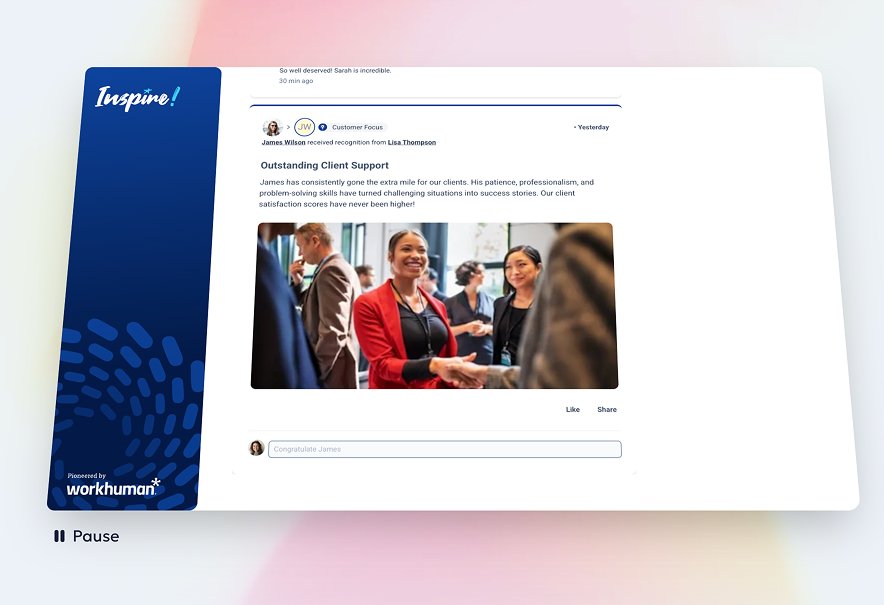
Despite having millions of recognition moments flowing through the platform, this information remained largely untapped.
The opportunity was to transform recognition into a living map of organisational capability.
The Problem
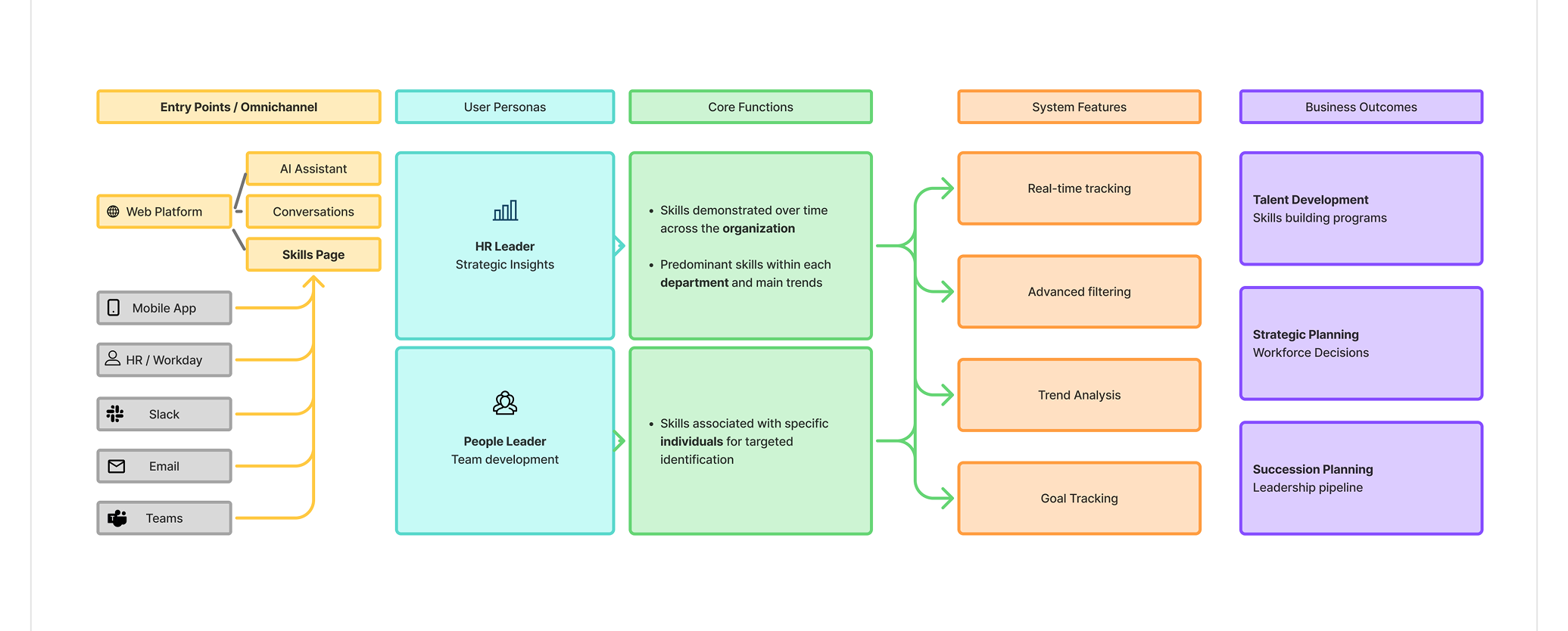
People leaders struggle to understand which skills are present, which are missing, and how they can be scaled across teams, making it difficult to plan learning, development and workforce strategy.
This became the central design question:
How might we help organisations understand their skills landscape using recognition data?
Understanding the Opportunity
Recognition awards already contain rich behavioural signals.
Instead of asking employees to manually complete lengthy skills assessments, we explored whether AI could identify soft skills directly from recognition messages.
Every award could become another data point.
Over time these signals could reveal how skills emerge across teams, departments and entire organisations.
Research
We validated the concept with enterprise customers.
15 research interviews
2 CHROs
2 VP of HR
10 People Leaders
1 VP Talent Management
The research consistently highlighted three needs:
Understand current organisational capability
Identify emerging skill gaps
Support better career conversations
From Taxonomy to Ecosystem
The original taxonomy contained only 10 skills.
The challenge was designing a system capable of scaling beyond:
72 skills
hundreds of future skills
multiple industries
evolving AI models
This required creating a flexible information architecture rather than a fixed list.
Exploring the Experience
(Large mockups from the deck.)
Short captions beneath each screen.
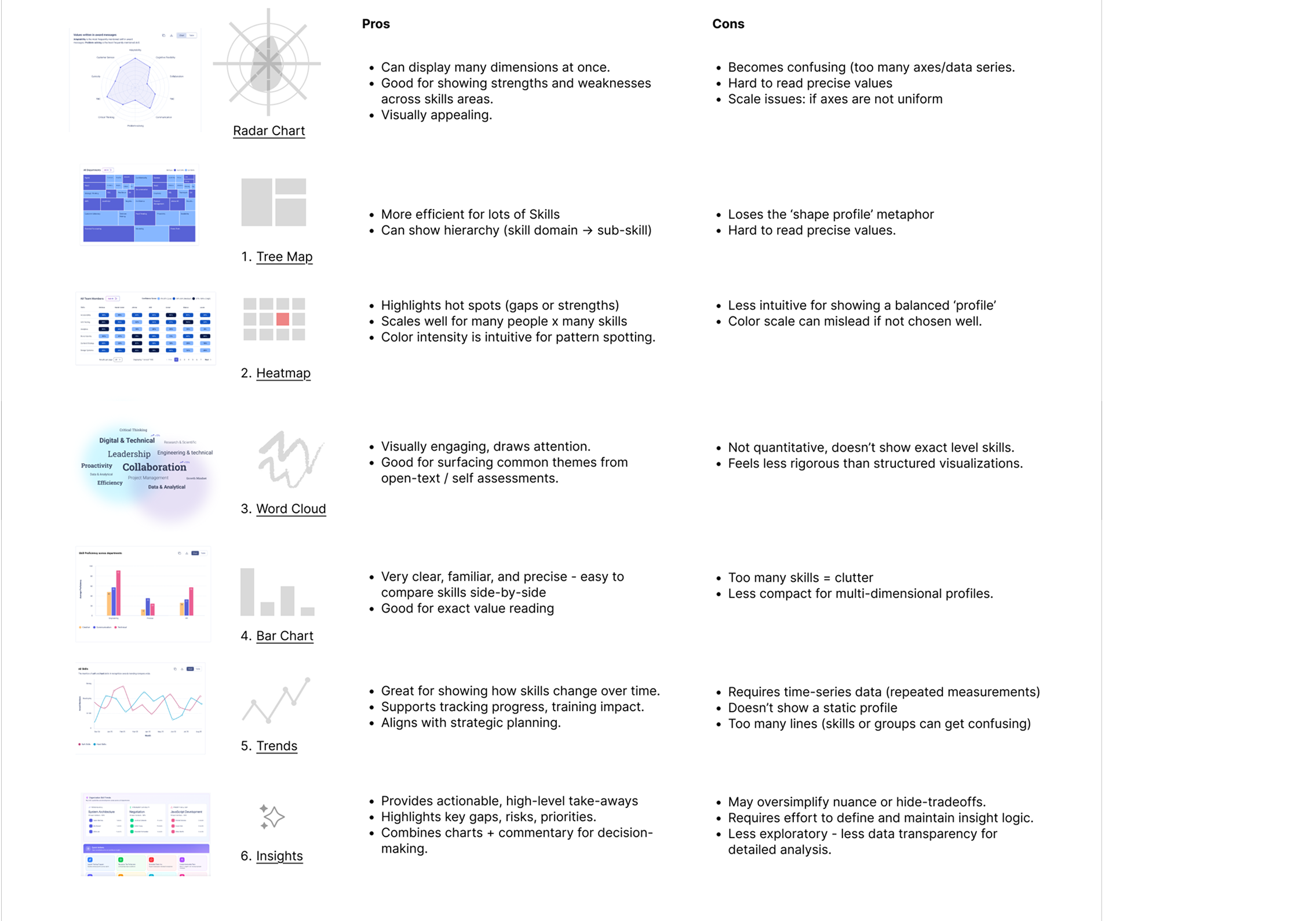
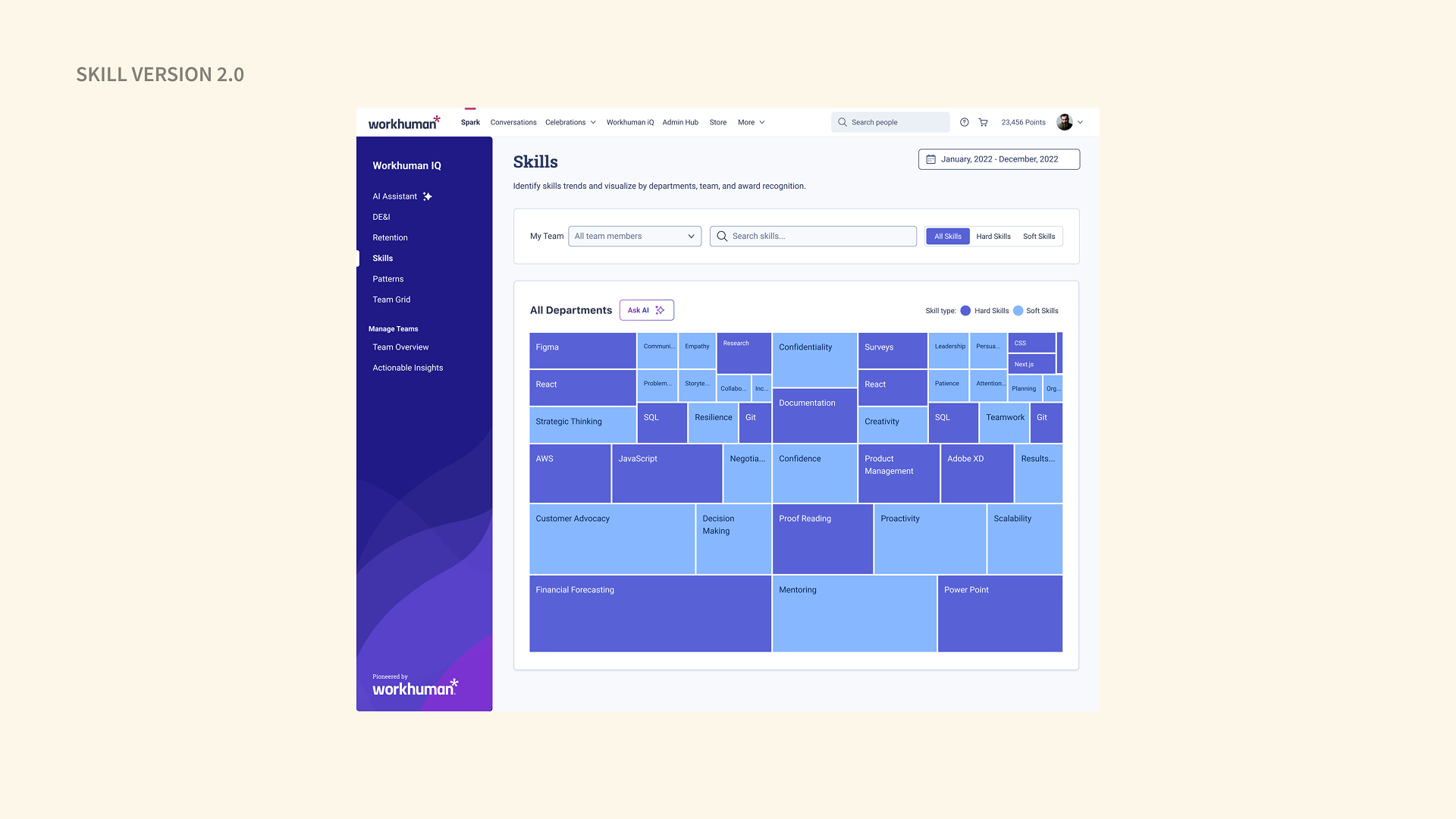
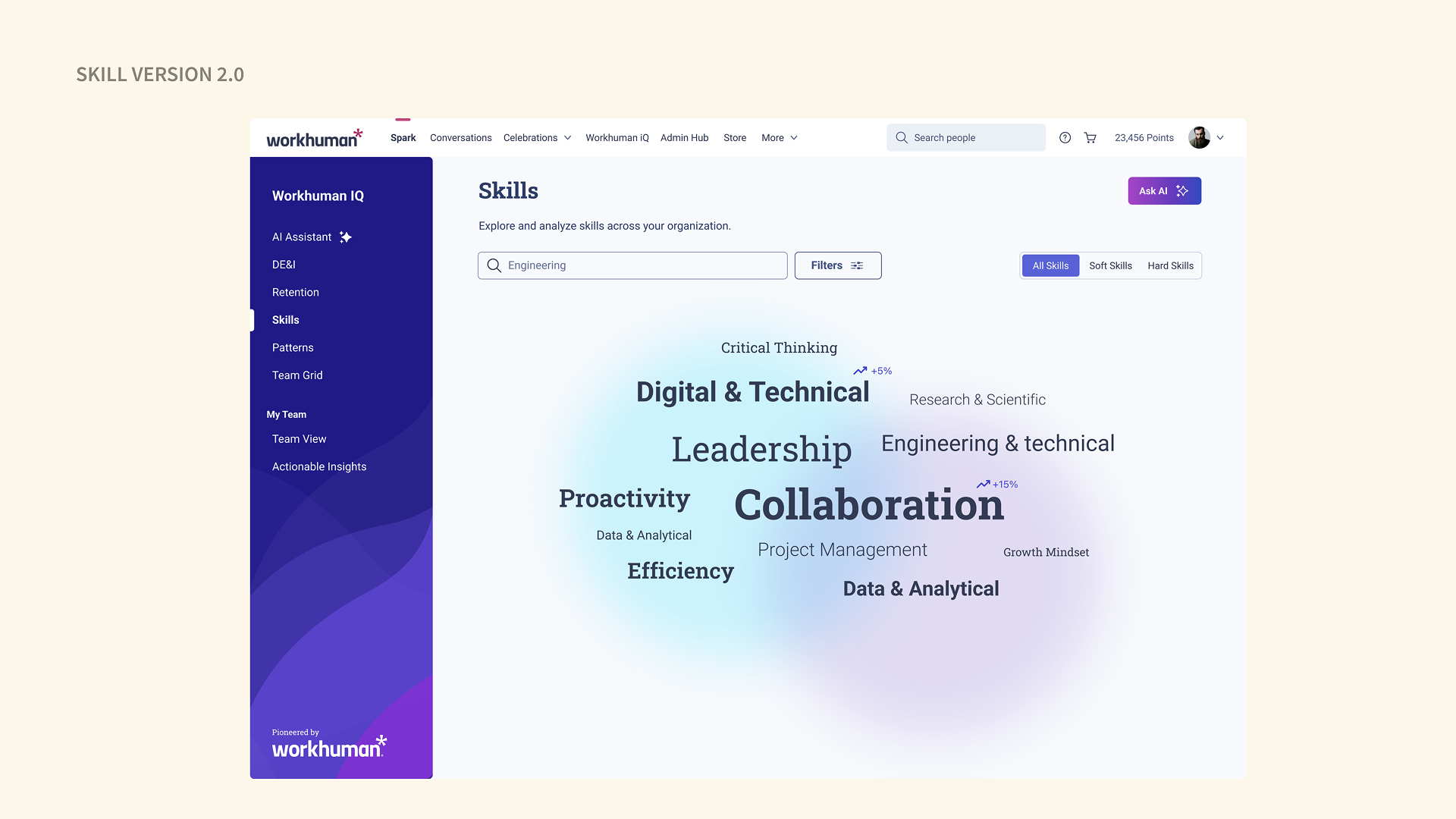
Hierarchical skill grouping
Helping leaders move from broad capabilities into increasingly detailed skill categories.
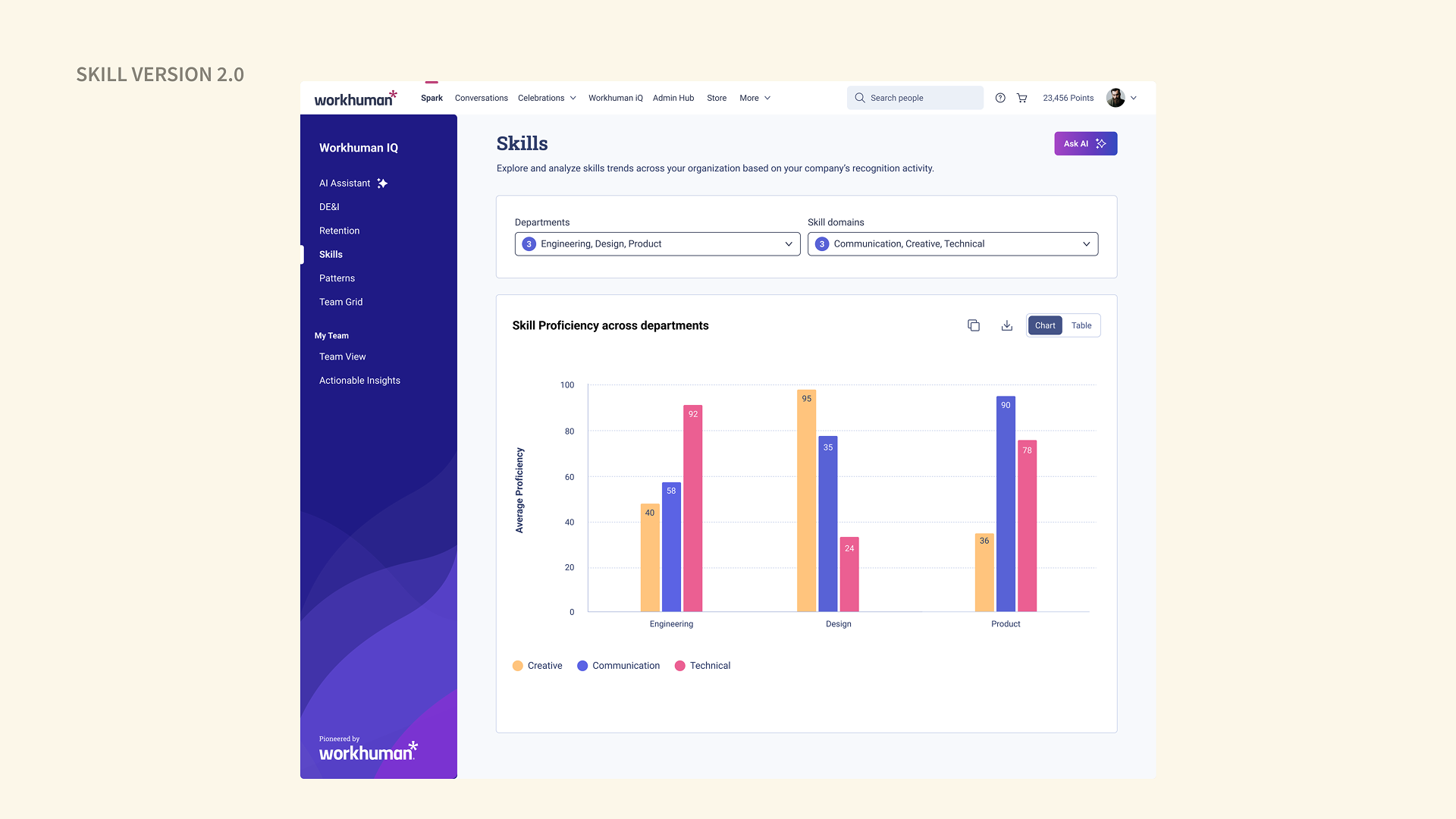
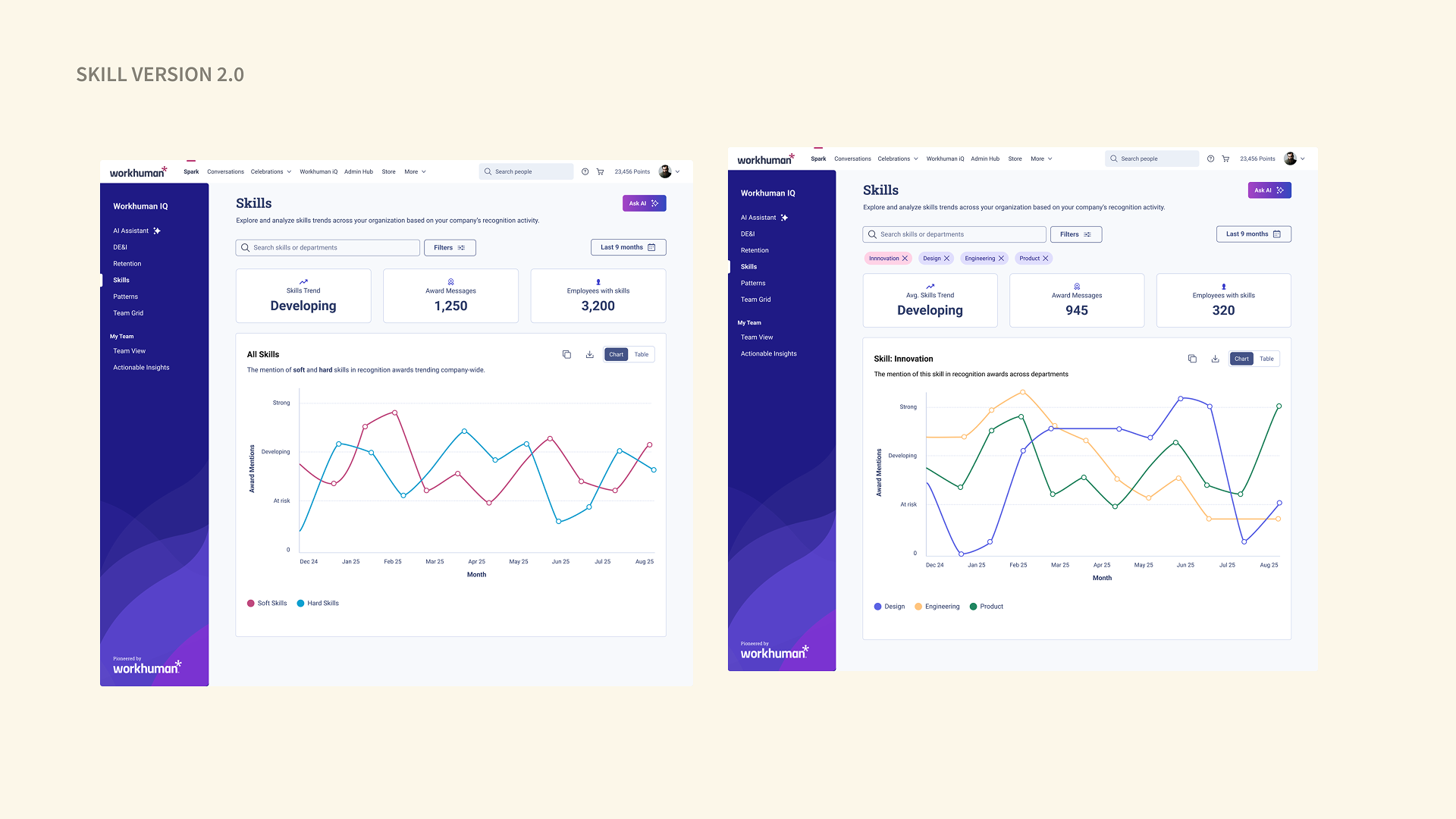
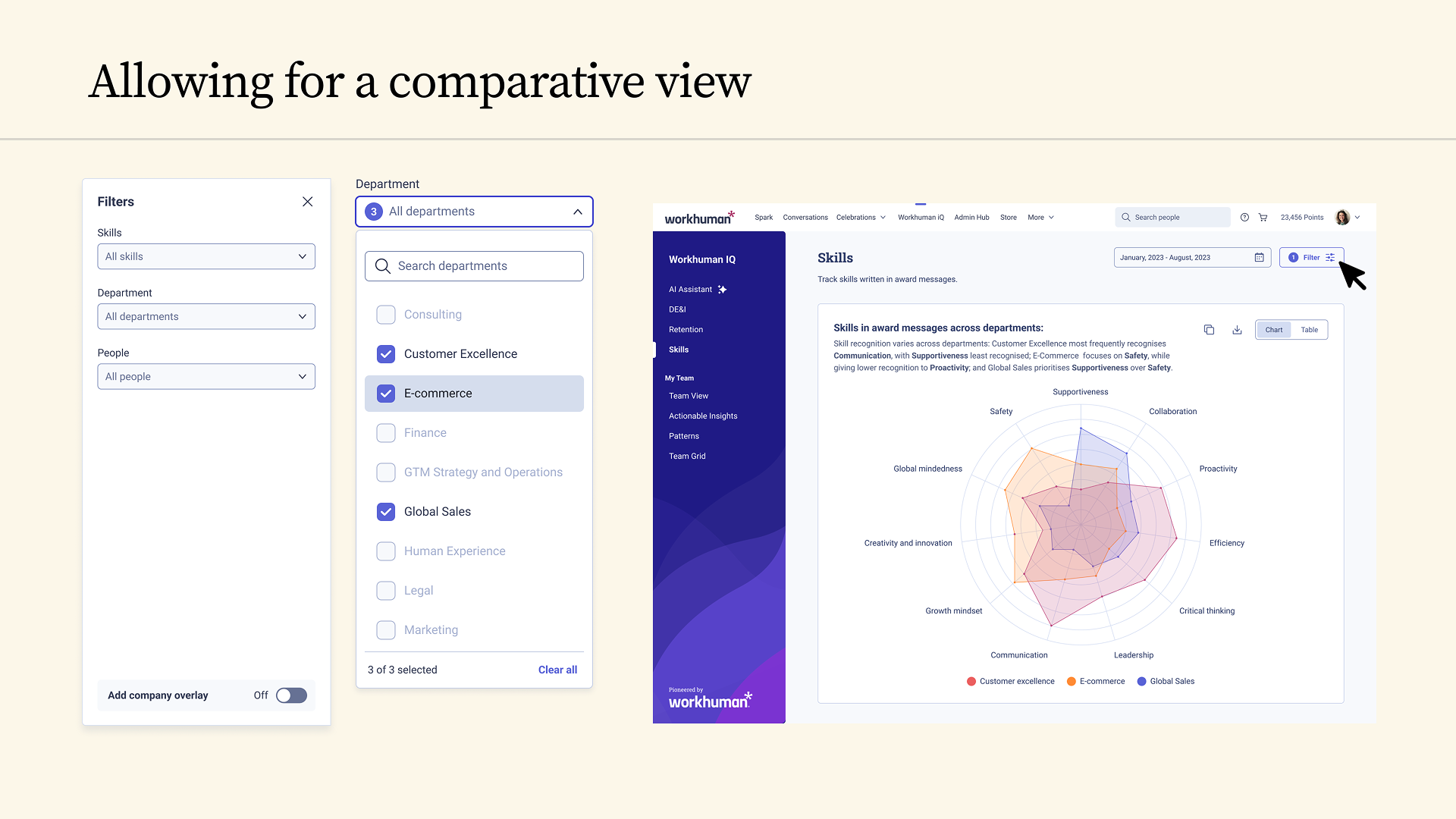
Comparative views
Understanding how skills differ across teams, departments and business units.
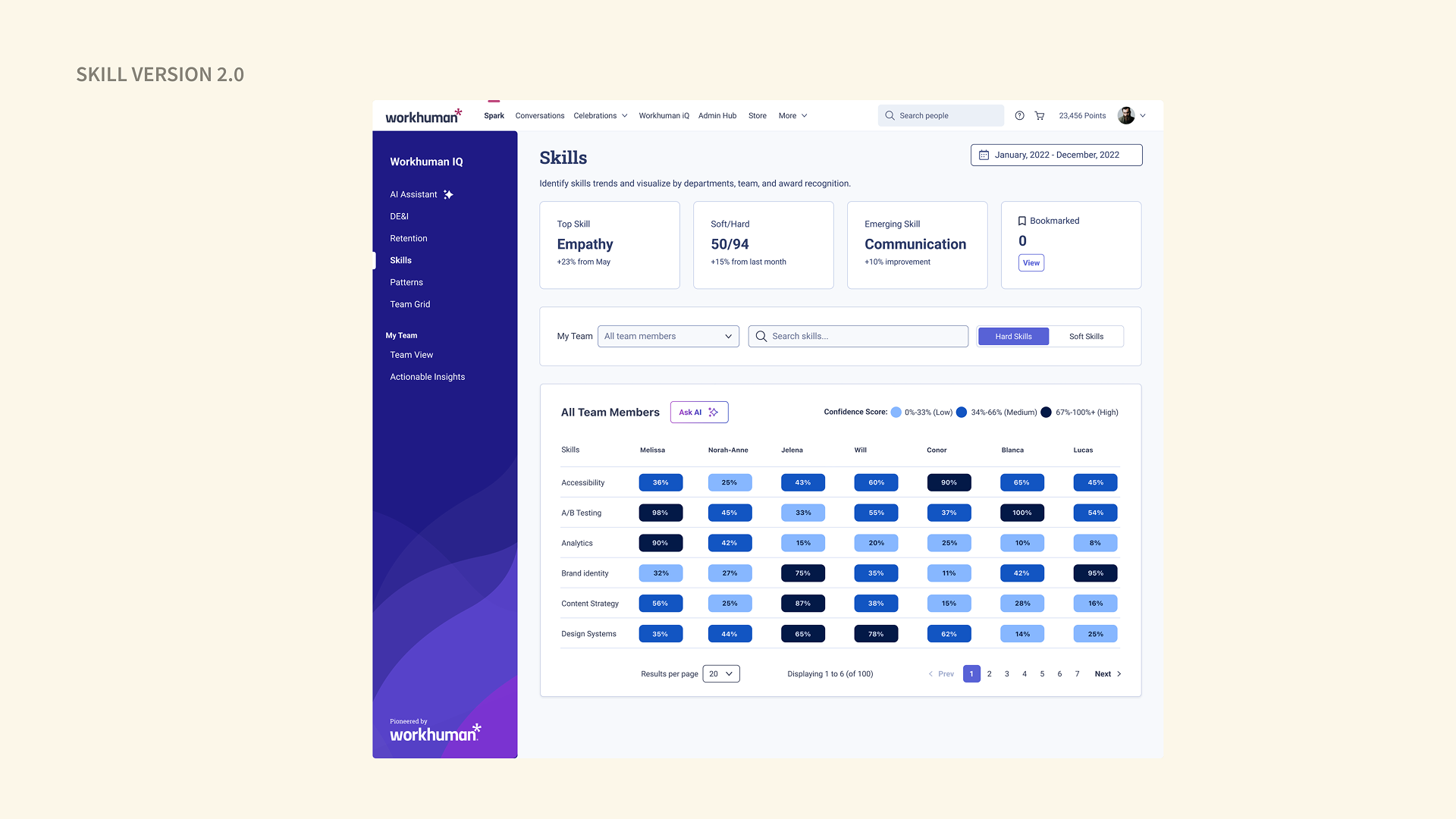
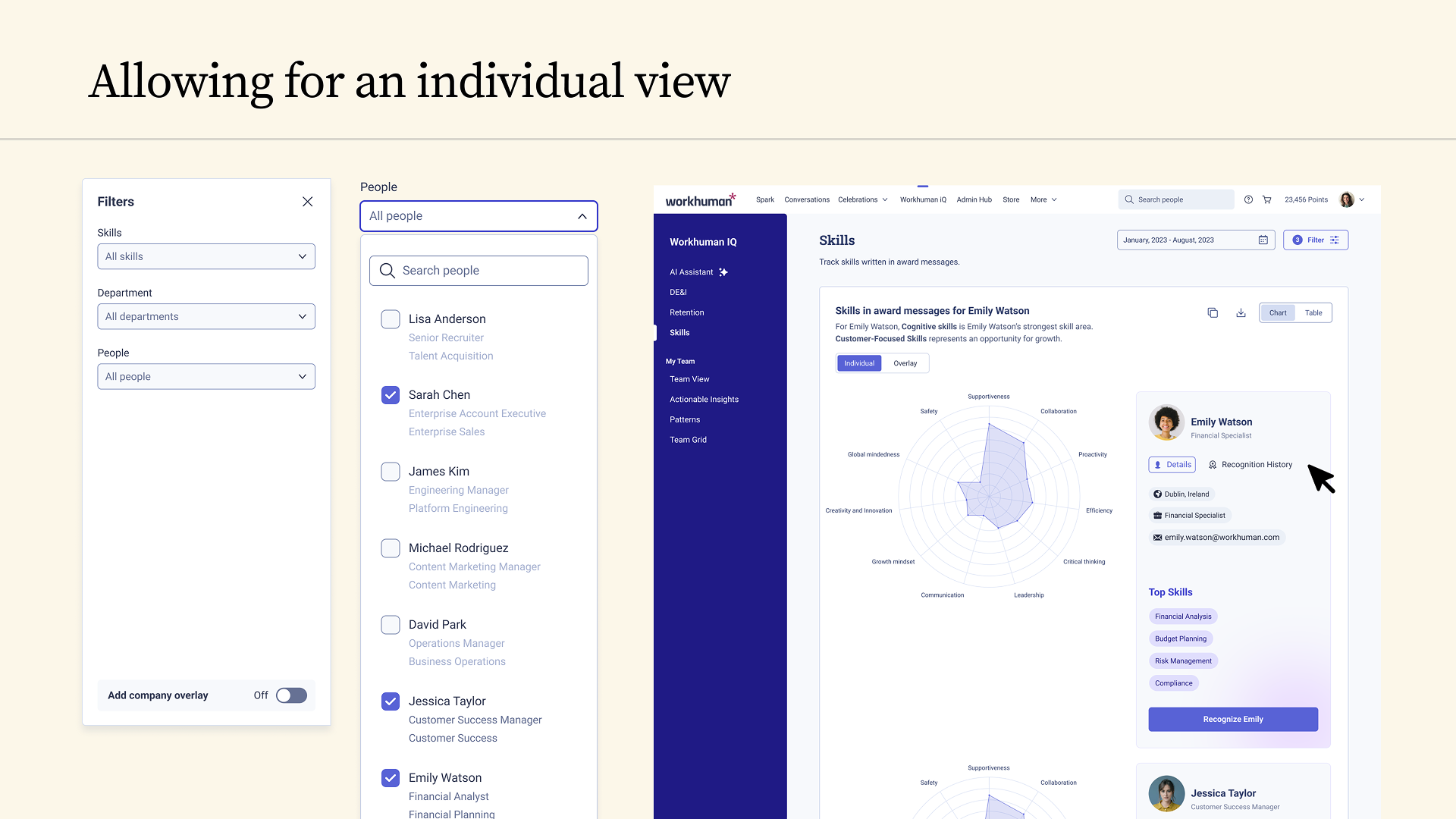
Individual profiles
Helping employees understand their strengths while supporting coaching and development conversations.
Designing for Decision Making
The product wasn't designed to simply visualise data. It was designed to support decisions.
Leaders could:
identify capability gaps
understand strengths
compare teams
support promotion conversations
prioritise learning investment
Measuring Success
Rather than measuring interface engagement, success focused on organisational outcomes.
Key metrics included:
Frequency of recognised skills
Growth of emerging capabilities
Employee retention
Learning uptake
Coverage across the organisation
What I Learned
Designing the future of skills wasn't about creating another dashboard. It was about designing a new language that helps organisations understand human capability at scale.
The biggest challenge wasn't visualising data, it was creating a model flexible enough to evolve as the definition of work continues to change.